Winter Watering in Monument, CO: What Needs It & Why
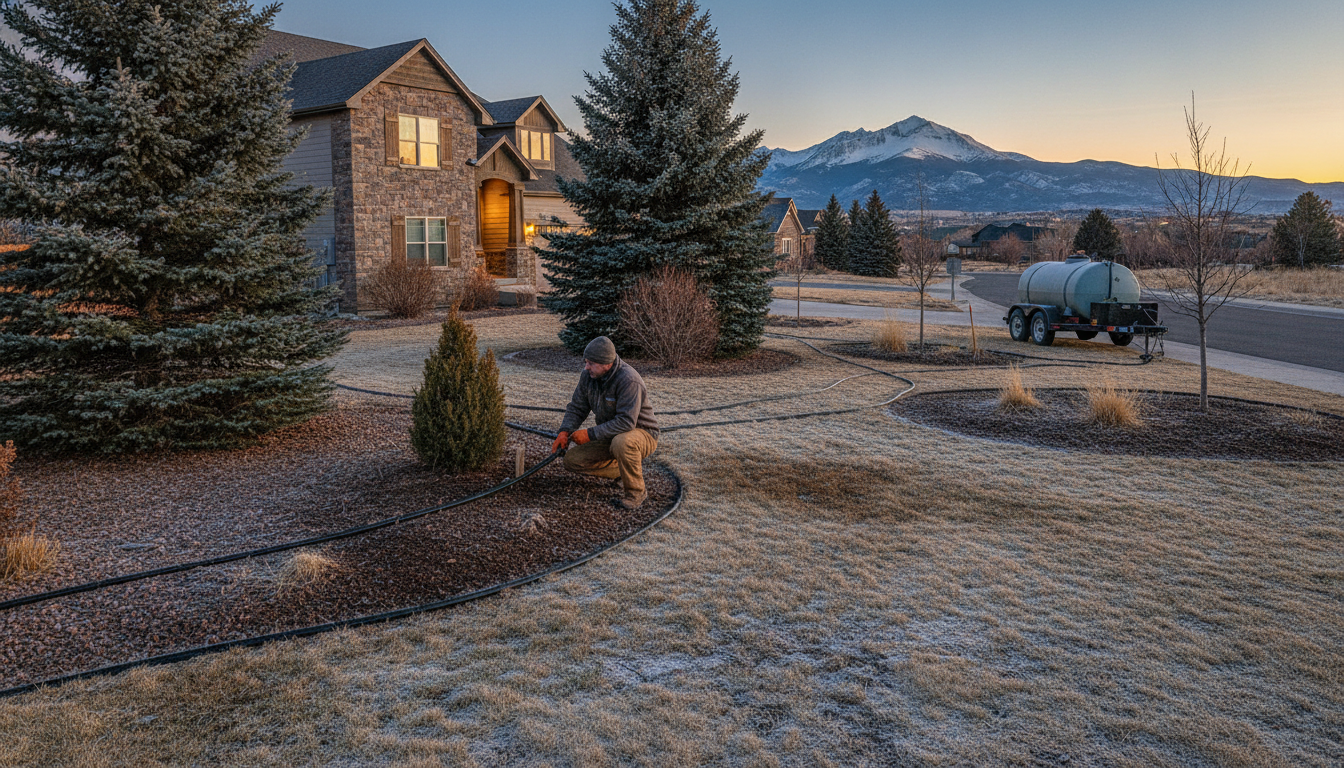
Dry winter spells at 7,000 ft can stress lawns and new plantings. Learn what to water, when, and why it matters in Monument & the Tri-Lakes area.
Winter in Monument and the Tri-Lakes area doesn't mean your landscape can just be forgotten until spring. At around 7,000 feet, we get long dry stretches between snowstorms — sometimes weeks of sun, wind, and single-digit humidity with no moisture reaching the soil at all. That combination of high elevation, intense sun, and drying wind pulls moisture out of soil and plant tissue fast, even when temperatures are cold. If you've invested in landscape design, new plantings, or a xeriscape yard, understanding winter watering is one of the simplest ways to protect that investment.
Why Winter Watering Matters at Elevation
Unlike lower-elevation areas that might get consistent snow cover to insulate and slowly hydrate the ground, the Palmer Divide and surrounding communities — Monument, Black Forest, Castle Rock, Falcon, Peyton, Fountain, and up into Woodland Park — often see snow melt or blow away quickly, leaving soil exposed to sun and wind. Roots don't go fully dormant in winter the way people assume; they continue slow water uptake whenever soil isn't frozen solid. When a dry spell stretches past three or four weeks with no snow or rain, root systems can dehydrate, leaving plants weakened or vulnerable to winterkill by spring.
The Freeze-Thaw Factor
Our climate is known for freeze-thaw cycles — 60-degree days followed by hard freezes are common from November through March. Dry roots combined with these temperature swings put extra stress on trees, shrubs, and perennials. Adequate soil moisture actually helps insulate roots and buffers some of that temperature swing, which is one more reason winter watering deserves a spot on your maintenance checklist.
What Actually Needs Winter Watering
Not everything in your yard needs attention during a dry spell. Established, mature native plants and well-adapted xeriscape plantings are generally built for this climate and can tolerate normal winter dryness without help — that's part of the appeal of drought tolerant landscaping in the first place. But a few categories deserve extra care:
New Installs and Recent Plantings
Anything installed within the last one to two growing seasons — new trees, shrubs, perennials, or sod — has a root system that hasn't fully established yet. These plants haven't developed the deep root network that helps established plants ride out dry spells, so they're the most vulnerable to winter drought stress.
Evergreens and Broadleaf Evergreens
Evergreen trees and shrubs keep their foliage through winter, which means they keep losing moisture through their needles or leaves all season long — unlike deciduous plants that drop leaves and reduce water loss. Evergreens planted near south- or west-facing exposures, where sun and wind are most intense, are especially at risk during extended dry periods.
Lawns, Especially New Sod or Seed
Turf areas installed recently benefit from occasional winter watering during dry spells to keep roots from drying out completely before they're fully established.
How to Water Safely in Winter
The general rule of thumb: water on a day when temperatures are above about 40°F, ideally around midday, so moisture has a chance to soak in before a hard freeze overnight. Watering onto frozen ground or right before a deep freeze does more harm than good. Frequency matters less than timing — most established landscapes only need supplemental water once every four to six weeks during a prolonged dry spell, not on a regular schedule.
Where Design and Drainage Come In
Good winter watering habits work hand-in-hand with good landscape design. Smart irrigation placement, proper grading, and drought-tolerant plant selection all reduce how much supplemental watering your yard needs in the first place. If you're planning new landscape installation, xeriscaping, or a yard renovation in Monument, Black Forest, Castle Rock, Falcon, Peyton, Fountain, Manitou Springs, or Woodland Park, building in smart water management from the start pays off every winter afterward — not just this one.
S&C Landscaping is family-owned and operated by Simeon and Chris, who bring 15 years of combined experience serving Colorado Springs and the surrounding communities. We understand how our elevation and climate affect everything from xeriscape maintenance to HOA landscaping to backyard design, and we're happy to talk through how your specific yard is handling the winter dry spells. If you'd like a free on-site consultation to look at your landscape's health or plan improvements for next season, reach out and share your name, phone, email, and a bit about your property — we'll follow up to schedule a visit.
Frequently Asked Questions
How often should I water my yard in winter?
Most established landscapes only need supplemental watering once every four to six weeks during an extended dry spell with no snow or rain, and only on days above about 40°F so the water can soak in before freezing again.
Do xeriscape plants need winter watering too?
Established, well-adapted xeriscape and native plantings are generally built to handle normal winter dryness, but any plants installed within the last year or two still benefit from occasional watering during long dry stretches until their root systems are fully established.
Can watering in winter actually damage my plants?
Watering onto frozen ground or right before a hard freeze can cause more harm than good, so timing matters — water during a thaw, ideally around midday, so moisture soaks in before temperatures drop again.