Fall Planting in Monument & the Tri-Lakes: What Grows at 7,000 Feet
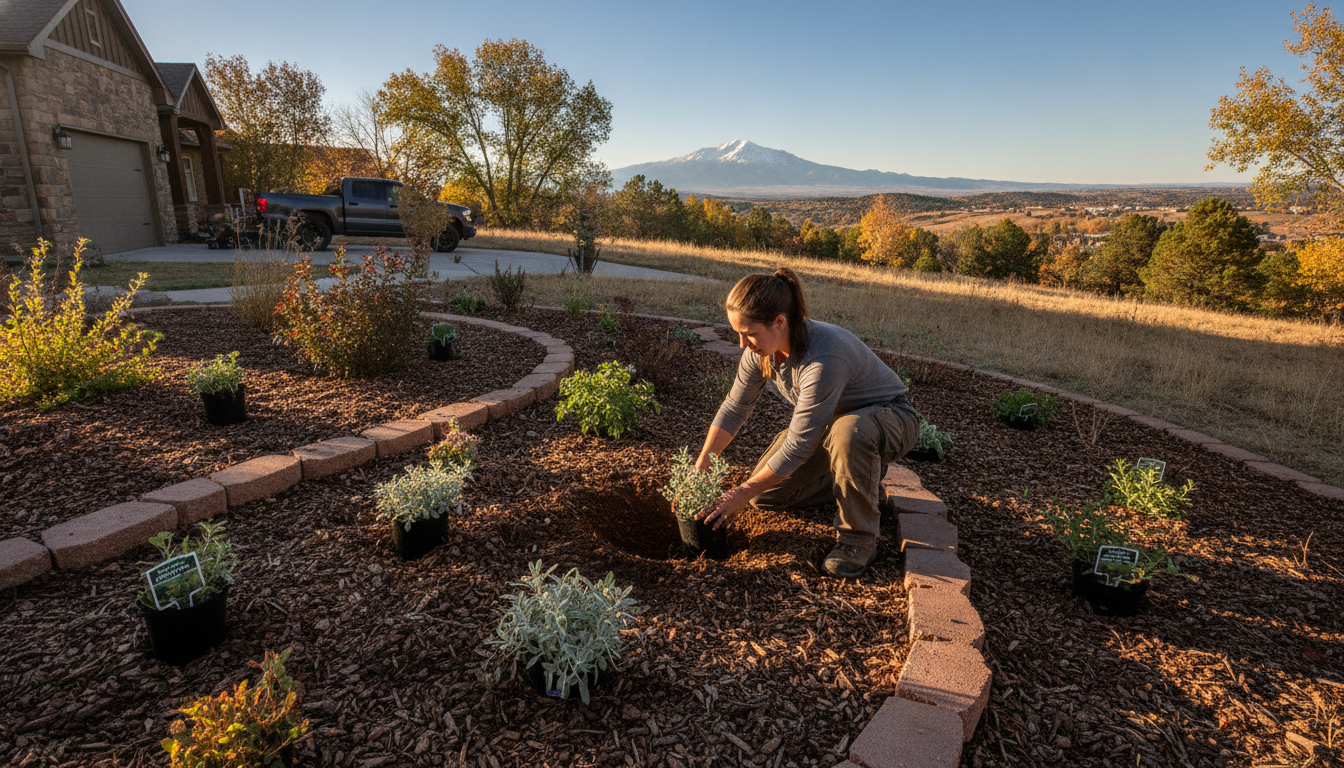
Fall planting in Monument and the Tri-Lakes calls for elevation-savvy choices. Learn what thrives at 7,000 feet and how S&C Landscaping can help.
Fall is one of the best times to plant in Colorado, but if you live in Monument, Palmer Lake, Woodmoor, or elsewhere along the Palmer Divide, your yard plays by different rules than landscapes down in Colorado Springs. At roughly 7,000 feet of elevation, the Tri-Lakes area sees harsher wind, earlier frosts, and heavier, wetter snow than neighborhoods just a few miles south. That means the plant choices that work beautifully in a Broadmoor or Flying Horse yard don't always hold up here. If you're planning fall planting in Monument or the surrounding Tri-Lakes communities, a little elevation-savvy planning goes a long way.
Why Elevation Changes the Planting Game
The Palmer Divide sits higher than most of the Colorado Springs metro area, and that extra elevation shortens the growing season considerably. Frost can arrive earlier in fall and linger later in spring, and wind exposure on open lots — especially in Black Forest and around Monument — dries out both soil and foliage faster than in more sheltered areas. Plants need to be established enough before the ground freezes to survive winter, so timing your fall planting correctly matters just as much as choosing the right species.
This is also why we treat landscaping in Monument, Black Forest, and the Tri-Lakes as its own category of work, distinct from projects we take on in lower-elevation communities like Fountain or Security-Widefield. The soil, the wind exposure, the snow load, and the frost timing all shift as you move up the Divide, and a landscape plan should reflect that reality rather than a one-size-fits-all approach.
Elevation-Savvy Plant Choices for Fall
When we design and install landscaping for Tri-Lakes homeowners, we lean toward native and drought-tolerant plants that have adapted to Colorado's high, dry, windy conditions over generations. These plants tend to need less water once established, tolerate temperature swings better, and hold their own against wind that would shred more delicate ornamentals. Incorporating native plants isn't just about resilience — it also supports local pollinators and reduces long-term maintenance, which fits naturally with xeriscaping principles we use throughout our drought-tolerant landscaping work.
Fall is a smart window for planting many trees, shrubs, and perennials because cooler air temperatures reduce stress on the plant while the soil is still warm enough to encourage root growth before winter dormancy sets in. That head start often means stronger, more resilient plants come spring. Of course, exactly what will thrive on your particular lot depends on your sun exposure, soil, wind patterns, and existing landscape — which is why we always recommend a proper design conversation before digging in.
Hardscaping and Drainage Matter Too
Good fall planting doesn't happen in isolation. Patios, walkways, and other hardscaping features shape how water moves through your yard, and drainage and grading issues that go unaddressed can undermine even the best plant choices by pooling water where it will freeze, or by washing soil away from new plantings. If you're already planning fall installation work — a new patio, a walkway, or a retaining feature — it's worth evaluating drainage at the same time so your new plantings have the best possible start.
This is also the season many HOA communities throughout the Tri-Lakes and greater Colorado Springs area schedule common-area refreshes, since cooler weather makes both planting and hardscaping work more comfortable for crews and less stressful on plants.
A Family-Owned Team That Knows the Divide
S&C Landscaping is family-owned and operated by Simeon and Chris, who bring 15 years of combined experience working in Colorado's landscaping industry. We're based in Monument, not Colorado Springs, and that local footprint means we've watched firsthand how differently a yard behaves up on the Palmer Divide compared to lower elevations. Whether you're in Monument, Palmer Lake, Woodmoor, Gleneagle, or Black Forest — or anywhere within our 35-mile service radius around Monument, including Castle Rock, Falcon, Peyton, Fountain, Manitou Springs, and Woodland Park — we bring that same elevation-aware approach to every design.
Every fall planting project is priced individually after a free on-site consultation, since the right plan depends on your yard's size, soil, sun exposure, and goals. There's no pressure and no cookie-cutter quote — just an honest look at what your property needs. If you'd like to get started, share your name, phone, email, and a bit about your project, and our team will follow up to schedule your free consultation.
Frequently Asked Questions
What makes fall planting different in Monument versus Colorado Springs?
Monument and the Tri-Lakes sit at a higher elevation than most of Colorado Springs, which means earlier frosts, stronger wind exposure, and a shorter window for plants to establish roots before winter. Plant choices and timing that work well downtown often need adjusting for properties up on the Palmer Divide.
Are native plants a good choice for fall planting at higher elevation?
Yes — native and drought-tolerant plants are generally well-suited to the wind, temperature swings, and lower water availability common at higher elevations like Monument and Black Forest, and they tend to require less ongoing maintenance once established.
Do you serve areas outside the Tri-Lakes for fall planting and landscape design?
Yes, we serve a 35-mile radius around Monument, which includes Colorado Springs, Black Forest, Falcon, Peyton, Fountain, Manitou Springs, Woodland Park, and north into Douglas County toward Castle Rock and Castle Pines. If you're unsure whether your address is covered, share your city or ZIP code and we'll confirm.