Freeze-Thaw Hardscape Protection in Colorado Springs
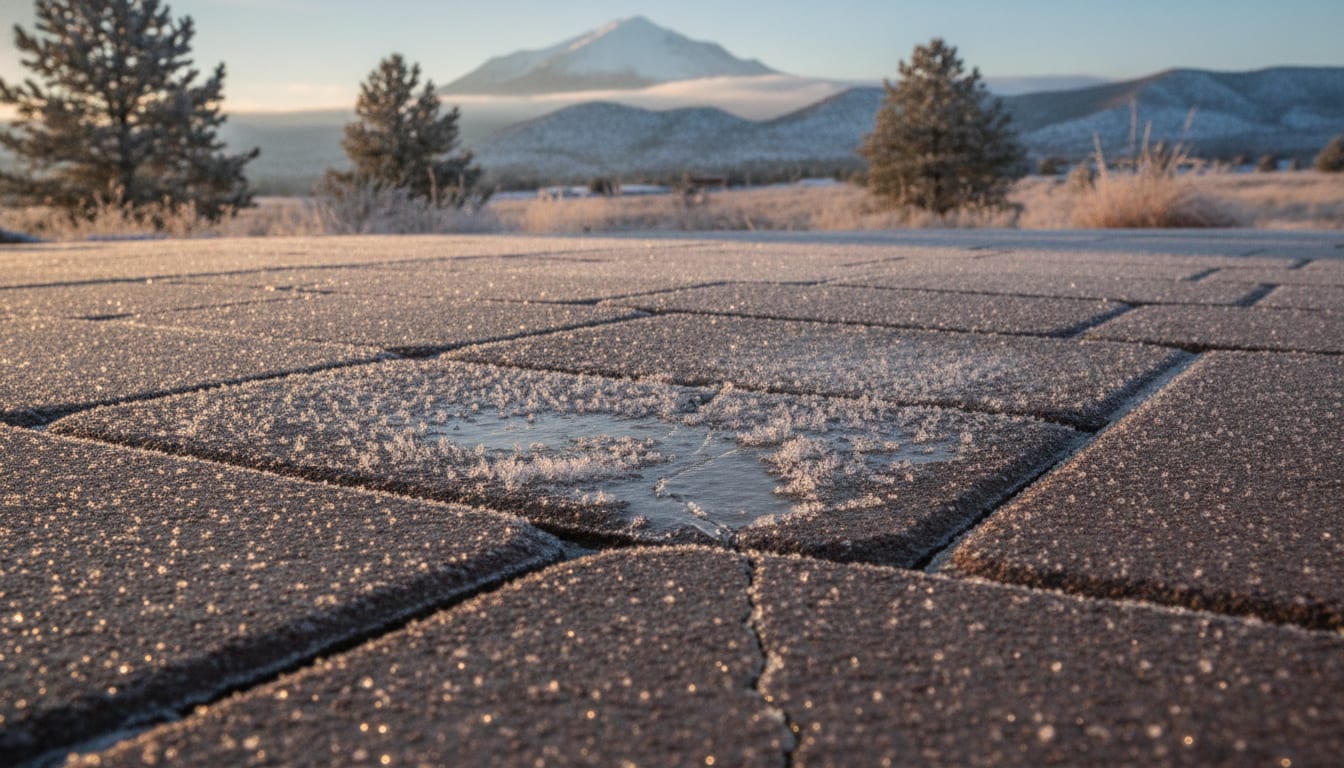
Learn how freeze-thaw cycles damage patios and walkways in Colorado, and how to protect concrete and pavers before deep freezes hit.
If you've ever noticed a patio surface flaking, a walkway joint widening, or a paver starting to tilt after winter, you've seen freeze-thaw damage firsthand. Along the Front Range, where temperatures can swing 40 degrees in a single day, this is one of the most common ways hardscapes quietly deteriorate — and it's almost entirely preventable with the right prep before deep freezes set in.
What Freeze-Thaw Damage Actually Is
Concrete, mortar, and even the base material under pavers are all slightly porous. When snow melts during a sunny afternoon and that moisture seeps into tiny cracks or joints, it has nowhere to go once temperatures drop again overnight. Water expands by roughly nine percent as it freezes, and that expansion pushes outward against the surrounding material. Repeat that cycle dozens of times over a Colorado winter, and you get surface scaling, cracking, heaving pavers, and widened joints that only get worse each year.
This is exactly why new concrete under about a year old is especially vulnerable — it hasn't fully cured and hardened, so it has more open pore structure for moisture to exploit. It's also why freeze-thaw damage tends to show up worst on patios, walkways, and steps that sit in shade part of the day, since snowmelt lingers there longer before it refreezes.
Why This Matters More in Colorado Springs and the Tri-Lakes Area
From Monument and Black Forest down through Colorado Springs, Fountain, and Manitou Springs, our freeze-thaw cycles are unusually aggressive compared to climates that stay consistently cold all winter. Intense high-altitude sun means snow and ice melt fast even on cold days, then refreeze hard once the sun drops. Elevation changes across the service area — from lower Fountain up toward Woodland Park — mean some yards see more freeze-thaw cycles per season than others, simply based on sun exposure and how long moisture sits before it refreezes.
How to Protect Your Hardscapes Before a Deep Freeze
A little attention in late fall goes a long way toward protecting the patio, walkway, or hardscaping investment you already have:
- Clear organic debris from joints and cracks. Leaves and dirt trap moisture against concrete and paver joints, giving freeze-thaw cycles more material to work with.
- Check and refresh paver joint sand. Low or washed-out joint sand lets pavers shift and rock, which accelerates cracking once freezing starts.
- Look at drainage around the hardscape. If water pools against a patio edge or walkway after rain or snowmelt instead of running off, that's a setup for repeated freeze-thaw cycling right where you don't want it. Proper drainage and grading is often the real long-term fix for a spot that ices over or crumbles every year.
- Avoid salt and chloride-based ice melt on concrete and pavers. This is worth repeating every winter: salt forces moisture deeper into the surface and accelerates the exact freeze-thaw damage you're trying to prevent, while also corroding reinforcement steel inside slabs and harming nearby plantings. It's a major reason S&C Landscaping never applies salt or ice melt to any surface we clear — we remove snow mechanically instead.
- Seal exposed concrete if it's due. A properly applied sealant reduces how much moisture penetrates the surface in the first place, which is one of the simplest ways to slow freeze-thaw wear year over year.
New Hardscapes Need Extra Care
If you installed a patio, walkway, or front yard hardscaping feature this year, give it extra attention this first winter. Freshly cured concrete and newly set pavers haven't fully stabilized yet, so they're more susceptible to early freeze-thaw cycling than an older surface that's been through several winters already.
Protecting the Whole Yard, Not Just the Hardscape
Freeze-thaw prevention works best as part of a broader seasonal approach — the same drainage and grading work that protects a patio also protects nearby plant beds, and the same attention that keeps a walkway from cracking helps xeriscape beds and native plantings handle winter moisture swings better too. If you're planning a new patio, re-grading a problem area, or want eyes on a hardscape before the hardest part of winter hits, S&C Landscaping offers a free on-site consultation to look at what's actually happening on your property — no guessing from a phone call. We serve Monument, Colorado Springs, Black Forest, Castle Rock, Falcon, Peyton, Fountain, Manitou Springs, Woodland Park, and the surrounding 35-mile radius, and we're happy to confirm coverage for your specific address.
Frequently Asked Questions
Can freeze-thaw damage be reversed once it starts?
Minor surface scaling can sometimes be patched or sealed to slow further damage, but deep cracking or heaving usually means the affected section needs repair or replacement. Catching early signs — hairline cracks, loose joint sand, small flakes on the surface — and addressing drainage issues before they repeat for another season is the most effective way to limit how far the damage spreads.
Does salt help prevent ice buildup on a patio or walkway?
No — salt and chloride-based ice melt actually make freeze-thaw damage worse, not better, because they drive moisture deeper into the surface before it refreezes and expands. That's why S&C never applies salt or ice melt to any driveway, walkway, patio, or step we clear. If a spot ices over consistently, drainage or grading is usually the real issue, and that's something we can evaluate on-site.
How often should I check my hardscape for freeze-thaw damage during winter?
A quick visual check after any major melt-and-refreeze cycle — typically a few times over the course of a Colorado winter — is enough to catch new cracking, shifting pavers, or pooling water before it becomes a bigger repair. Paying closer attention to shaded areas, new concrete, and spots that have iced over in past winters will catch the most common problem areas early.