Why North-Facing Driveways Ice Over in Black Forest, CO
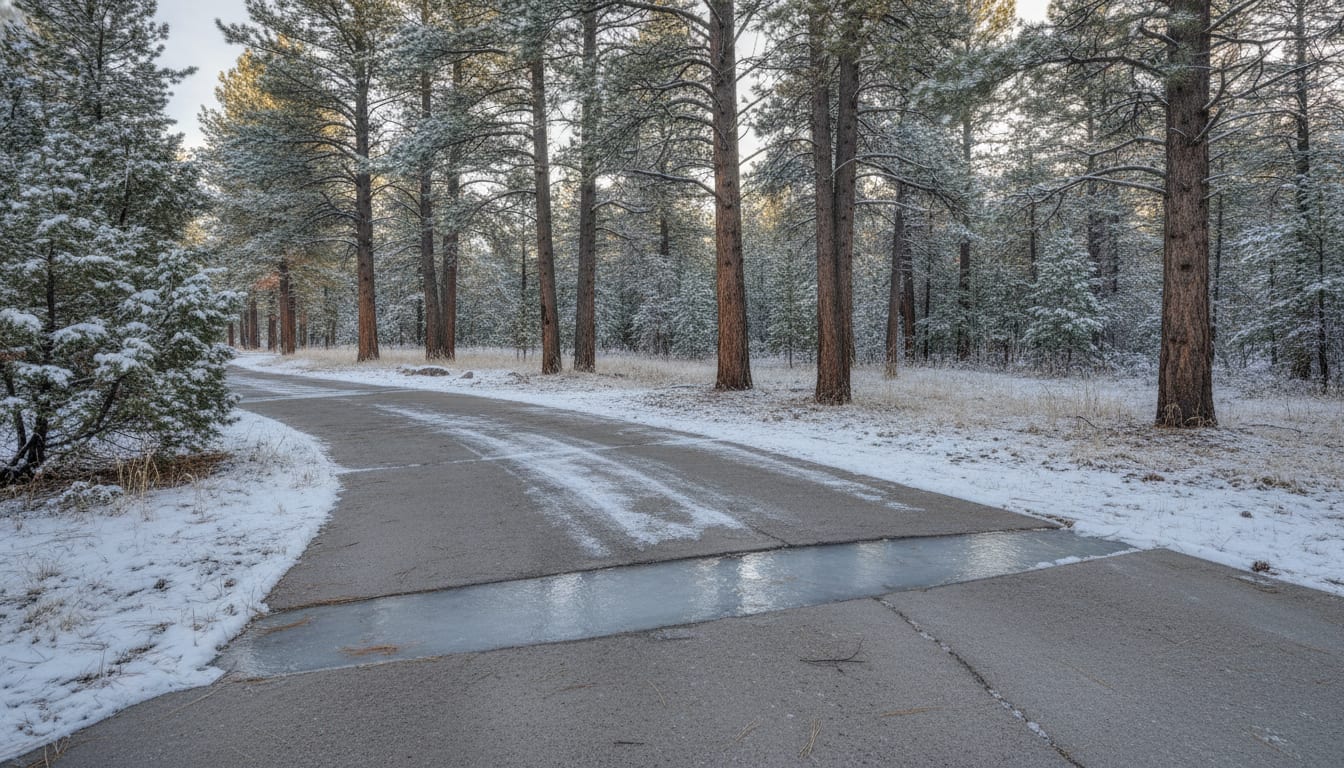
North-facing driveways in Black Forest hold ice as sun angles drop. Learn why it happens and how drainage, grading, and winter service can help.
If your Black Forest driveway seems to grow a stubborn sheet of ice every winter while your neighbor's clears off by noon, the direction your driveway faces is probably the culprit. As the sun drops lower on the horizon through late fall and winter, north-facing slopes and driveways lose their best ally in the fight against ice: direct sunlight. Understanding why this happens — and what actually fixes it — can save you a lot of frustration (and a few close calls on the ice) this season.
Why North-Facing Driveways Hold Ice Longer
Here on the Palmer Divide, elevation already means more snow, earlier and later in the season, than areas just a few miles south in Colorado Springs. Add a north-facing orientation to that equation and you get a driveway that sits in shadow for most of the day, especially once the sun's angle drops in October and stays low through February.
South-facing surfaces get direct sun for hours, which helps melt a thin layer of snow and dry the concrete before dark. North-facing driveways in Black Forest, shaded further by the tall ponderosa pines so common in the area, often never see direct sun at all on a short winter day. The result is snowmelt that never fully evaporates, refreezing overnight into a glassy, compacted layer that gets thicker with every storm.
It's Not Just the Sun — Drainage Plays a Role Too
Sun exposure is only part of the story. If a driveway has a low spot, a poor slope, or water runoff from the roof or yard draining across it, that extra moisture collects right where it can't dry out. Each freeze-thaw cycle adds another thin layer of ice on top of the last, which is why some driveways develop a persistent icy patch in the exact same spot, storm after storm, no matter how often it gets cleared.
This is where many homeowners reach for rock salt or chloride-based ice melt, hoping to break the cycle. We'd gently steer you away from that. Salt forces moisture deep into the pores of the concrete, where it refreezes and expands overnight — slowly scaling and pitting the surface permanently. It also corrodes the reinforcement inside the slab, tracks indoors on boots and paws, and washes into the beds alongside your driveway, where it can kill plants. Driveways poured within the last year are especially vulnerable. S&C Landscaping never applies salt or ice melt to any driveway or walkway, for any client, under any circumstances — we clear mechanically instead, and we're proud of that choice.
The Real Fix: Grading and Drainage
If a spot on your driveway ices over every single storm, that's usually telling you something about how water is moving across your property, not just about the sun. Improving the grading — adjusting the slope so water sheds away from the driveway instead of pooling on it — or adding drainage to intercept runoff before it crosses the concrete can eliminate the problem at its source. This is the same kind of drainage and grading work we do throughout the Tri-Lakes area and beyond, from Black Forest to Monument, Falcon, and Castle Rock, often alongside broader landscape design projects that also improve curb appeal and protect the health of your yard.
Winter Driveway Care While You Wait on a Long-Term Fix
Regrading isn't always a quick winter project, so in the meantime, consistent, careful mechanical snow removal matters. We serve Woodmoor, Monument, Black Forest, Palmer Lake, and Gleneagle with driveway, walkway, and step snow clearing through the season. Because these Palmer Divide towns sit around 7,000 feet, they tend to take heavier, wetter snow earlier and later than Colorado Springs does just a few miles south — which makes a shaded, north-facing driveway even more prone to that recurring ice sheet.
If you're noticing the same icy patch every storm, we're happy to take a look. A free on-site visit lets us assess whether the issue is simply orientation and shade, or whether drainage and grading work would solve it for good. Give us a call at (719) 789-7899 or share your address and we'll have the team follow up.
Frequently Asked Questions
Why does my driveway ice over even after I shovel it?
If your driveway faces north or sits in shade for most of the day, especially in winter when the sun angle is low, meltwater from earlier sun exposure or runoff doesn't fully evaporate and refreezes overnight. Combined with a drainage or grading issue, this can create a persistent ice layer in the same spot no matter how often you clear it.
Do you salt driveways to help with ice in shaded areas?
No — we never apply salt or chloride-based ice melt, even on stubborn shaded or north-facing driveways. Salt drives a damaging freeze-thaw cycle into the concrete, corrodes the slab's reinforcement, and harms nearby plants. We clear snow mechanically instead, and for recurring ice spots we look at drainage and grading as the real long-term solution.
Can grading actually stop a driveway from icing over?
In many cases, yes. If runoff from the roof, yard, or a low spot in the driveway is pooling and refreezing, regrading the slope or adding drainage to redirect that water can eliminate the recurring ice. We offer a free on-site visit to evaluate whether grading, drainage, or simply the driveway's orientation is behind the problem.